

Long-Term Car Care in Omaha: Maximizing Your Vehicle’s Lifespan Through Nebraska Seasons
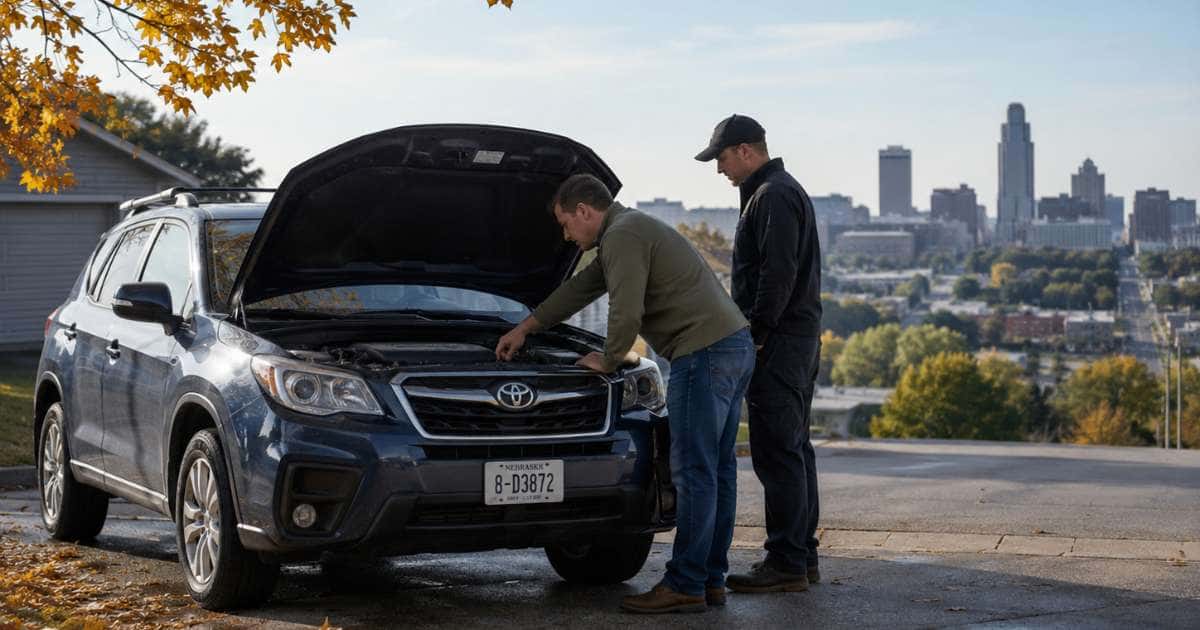
Built Around Nebraska Conditions
Why Nebraska’s Climate Creates Unique Car Care Challenges
Nebraska delivers extremes in every direction. Winters drop well below freezing, summers push into the high 90s, and the transition seasons are rarely easy on anything mechanical. That kind of temperature swing stresses rubber components, fluids, batteries, and metal parts. Add Omaha’s heavy road salt usage and the freeze-thaw cycles that punish pavement and undercarriages alike, and you’ve got conditions that demand more consistent attention than your owner’s manual typically covers.
The table below breaks down priority tasks by season for Omaha drivers:
Omaha’s Four-Season Maintenance Priorities
| Season | Priority Tasks |
|---|---|
| Winter Prep | Battery test, coolant/antifreeze check, tire pressure and tread, brake inspection, washer fluid, heater/defroster function |
| Spring Recovery | Underbody rust inspection, alignment check, suspension evaluation, oil change, tire rotation |
| Summer | Cooling system and coolant levels, A/C check, serpentine belt inspection, fluid top-offs |
| Fall | Spark plugs, air filter, oil change, brake inspection, tire pressure, wiper blades, battery retest |
Winter Car Care in Omaha: Cold-Weather Protection That Counts
Winter preparation is where most Omaha drivers either get ahead of the problem or fall behind it. Most of it doesn’t require specialist knowledge, just knowing what to check and when.
Battery and Fluid Checks Before the Cold Sets In
Cold weather is brutal on car batteries. A battery that tests weak in October may fail completely on a 10-degree February morning. Before temperatures drop, have your battery tested professionally. Check that connections are clean, tight, and rust-free, since corrosion at the terminals reduces the power actually reaching the starter.
Alongside the battery, check your coolant levels and antifreeze mixture to confirm it’s rated for Omaha’s low temperatures. Engine oil should match winter viscosity recommendations, and brake fluid, power steering fluid, and windshield washer fluid all deserve a look before the cold arrives.
Tires, Brakes, and Road Salt Damage
Traction is everything in an Omaha winter. Check tread depth and monitor tire pressure regularly: pressure can drop about 1–2 PSI for every 10°F decrease in temperature, which means a tire that was properly inflated in October may be noticeably low by January.
Brakes deserve attention too. Winter driving involves more hard stops, and worn pads become a real safety concern on ice. Road salt accelerates rust on brake lines, rotors, and the undercarriage, so rinsing the underside of your vehicle during warmer winter days helps keep that corrosion from spreading through the season.
Spring Recovery: Undoing What Winter Did to Your Vehicle
Once the salt trucks stop running and temperatures climb, it’s tempting to think the hard part is over. Spring is actually when much of winter’s damage becomes visible, making it the season for thorough inspection and catch-up maintenance.
Post-Salt Underbody and Rust Inspection
Salt clings to the undercarriage, wheel wells, and frame, corroding metal well after the last snowfall. A post-winter underbody inspection is something many drivers skip entirely, and it tends to be a mistake. A mechanic can spot early-stage rust before it spreads to brake lines, fuel lines, or structural components. Surface rust caught early is manageable; left alone, it becomes structural damage that’s expensive to fix.
Alignment, Suspension, and Pothole Repair
Omaha’s spring roads are rough for a reason. Repeated freeze-thaw cycles cause pavement to heave and crack, and those potholes can damage your alignment and suspension. If your car pulls to one side, steering feels loose, or you’re seeing uneven tire wear, something likely took a hit over the winter.
An alignment check in spring protects your tires and improves fuel efficiency. Suspension components like struts and shocks should also be evaluated, especially on higher-mileage vehicles.
Summer Heat and Engine Health in Nebraska
Summer in Omaha means heat, humidity, and long drives with the A/C running hard. All of that puts extra demand on your cooling system. If coolant hasn’t been flushed on schedule, summer is when a neglected system shows its weakness, and overheating is a common, entirely avoidable source of serious engine damage.
Your serpentine belt, water pump, and thermostat all play roles in keeping engine temperature regulated. A failing belt often gives warning signs like squealing or visible cracking before it snaps. A/C systems should be checked before peak summer heat as well. A refrigerant recharge or cabin air filter replacement can reduce the load on your electrical system and keep the cabin comfortable through August.
Fall Tune-Up: Your Most Important Pre-Winter Checkpoint
Fall is the season where maintenance investment pays off most. This is your window to address anything that developed over summer and get your vehicle ready before Nebraska winter arrives. Spark plugs, air filters, and an oil change are standard fall priorities. So is a full brake inspection, tire tread check, and confirming wiper blades can handle sleet and freezing rain. Tire rotations roughly every 5,000–8,000 miles (following your vehicle manufacturer’s schedule) and an alignment check about every 12 months make strong pre-winter steps. Schedule this before early November, when the first cold snaps tend to arrive without much warning.
Ready to make sure your vehicle is up to the task? Start your approval process online if you’re also thinking about upgrading to something more reliable before winter.
Start With a Vehicle Built for Everyday Omaha Driving
Compare current used cars, trucks, vans, and SUVs, or begin the approval process before visiting CarHop of Omaha.
Long-Term Maintenance Tasks Omaha Drivers Tend to Skip
Seasonal checks keep you safe through each part of the year, but there’s another layer of vehicle care that operates on a longer timeline. These are the intervals most drivers either forget or delay until something goes wrong.
Transmission, Coolant, and Belt Services
| Service | Commonly Recommended Interval | Consequence of Skipping |
|---|---|---|
| Transmission fluid change | Every 30,000–60,000 miles (varies by manufacturer) | Rough shifting, eventual transmission failure |
| Coolant flush | Per manufacturer schedule | Acidic coolant corrodes the cooling system from inside |
| Timing belt replacement | Per manufacturer schedule (often 60,000–100,000 miles) | Belt snap can cause engine damage or leave you stranded |
| Serpentine belt inspection | Annually or per manufacturer guidance | Failed belt disables alternator, A/C, and power steering |
| Fuel system cleaning | Per manufacturer or as symptoms arise | Injector buildup reduces performance and fuel efficiency |
High-Mileage Vehicle Care
For vehicles with over 100,000 miles, more frequent oil changes, close attention to gaskets and seals, and proactive checks on hoses and clamps extend engine life meaningfully. Stop-and-go Omaha traffic can accelerate fuel injector buildup, so periodic fuel system cleaning helps maintain smooth operation. At high mileage, attentive care stops being optional.
How to Spot Warning Signs Before They Become Major Repairs
Vehicles rarely fail without warning. A few minutes of self-triage can tell you a lot before you head to a shop. Braking issues are often the easiest to catch by ear: a high-pitched squeal usually points to worn brake pads, while grinding during turns is more likely a wheel bearing problem. On the road, a vibration at highway speeds typically signals a tire balance or alignment issue, and a car that pulls to one side often comes down to alignment or uneven tire pressure.
Your senses pick up plenty under the hood too. A sweet smell near the engine usually means a coolant leak, and weak heat output from the vents can stem from low coolant or a failing heater core. Puddles are worth a quick look as well: a brown puddle is generally an oil leak, while a red or green puddle points to leaking transmission fluid or coolant. Rounding out the list, slow cranking or dim lights usually indicate a weak battery, and streaky or chattering wipers just mean it’s time for new blades.
Catching these issues early is the difference between a modest repair bill and deferred maintenance that becomes a significant expense. Finding a trustworthy shop for honest diagnostics is worth the effort for any Omaha driver.
Related Omaha Vehicle-Care Resources
Start Strong With a Reliable Used Car From CarHop of Omaha
No matter how diligent you are about long-term car care in Omaha, everything starts with the vehicle itself. A car that’s been well-maintained and honestly represented gives you a real foundation to build on. CarHop of Omaha provides local drivers with used cars, trucks, vans, and SUVs, with in-house financing designed for buyers who have faced credit challenges.
Seasonal maintenance is much easier to commit to when you’re driving a vehicle you feel good about. Browse our used vehicle inventory or reach out through our contact page to get started. With the right car and a solid seasonal maintenance plan, your vehicle can handle everything Nebraska has to offer for years to come.
CarHop of Omaha
5153 NW Radial Hwy, Omaha, NE 68104
(402) 991-8181
Frequently Asked Questions About Long-Term Car Care in Omaha
What should Omaha drivers check before winter?
Priority winter-preparation tasks include testing the battery, checking coolant and antifreeze, inspecting tire tread and pressure, reviewing brake condition, topping off washer fluid, and confirming the heater and defroster work properly.
Why is a spring underbody inspection important in Omaha?
Road salt can remain on the undercarriage, wheel wells, and frame after winter. A spring inspection can identify early rust before it spreads to brake lines, fuel lines, or structural components.
What maintenance helps protect a vehicle during an Omaha summer?
Summer priorities include checking the cooling system and coolant level, inspecting the serpentine belt, reviewing the water pump and thermostat when appropriate, topping off fluids, and checking the A/C system before peak heat.
What warning signs should a driver address quickly?
Warning signs include brake squealing, grinding during turns, highway-speed vibration, pulling to one side, unusual fluid puddles, a sweet smell near the engine, slow cranking, dim lights, or streaky and chattering wipers.
How should maintenance change after 100,000 miles?
Higher-mileage vehicles benefit from closer attention to oil-change timing, gaskets, seals, hoses, clamps, cooling-system components, belts, and fuel-system performance. Follow the vehicle manufacturer’s maintenance schedule and address symptoms early.
Where can Omaha drivers browse dependable used vehicles?
Drivers can browse CarHop of Omaha’s current selection of used cars, trucks, vans, and SUVs online or visit the dealership at 5153 NW Radial Hwy in Omaha.
Looking for a stronger starting point?
Explore current Omaha inventory or begin the CarHop approval process online.
Maintenance needs and service intervals vary by vehicle, manufacturer, mileage, driving conditions, and service history. Consult your owner’s manual and a qualified automotive professional for recommendations specific to your vehicle. Financing approval, rates, and terms are subject to application review and individual eligibility and are not guaranteed.
0 comment(s) so far on Long-Term Car Care in Omaha: Maximizing Your Vehicle’s Lifespan Through Nebraska Seasons