

Omaha’s Spring Thaw: Essential Car Maintenance Tips Before the Potholes Hit
As the last of the snow melts away, Omaha drivers breathe a collective sigh of relief. But winter leaves a parting gift on our roads:
a minefield of potholes. If you commute on I-80, I-480, or Dodge Street, you’ve probably already felt
the thuds and jolts that show up as the freeze-thaw cycle opens cracks, water slips in, and the pavement breaks apart overnight.
Spring is when “it’s probably fine” turns into uneven tire wear, shaky steering, and surprise repair bills.
This checklist is built for Omaha’s real conditions: corrosive road salt and brine that coat your undercarriage for months, and potholes that can damage
tires, wheels, suspension, and alignment in one hit. Use the steps below to protect your vehicle, catch problems early, and drive into the spring thaw
with more confidence.
First Things First: Wash Away Winter’s Grime
Omaha winter driving doesn’t just leave your car dirty, it leaves it chemically coated. Road salt and brine spray up under your vehicle and mix with sand,
grime, and slush. Over time, that mixture dries into a crust on your undercarriage. The problem is that salt residue doesn’t “stop working” when the snow
disappears. As spring moisture returns, the salt reactivates, accelerating corrosion on the parts you can’t easily see.
Your underbody is packed with components that matter for safety and long-term reliability: frame rails, subframes, brake and fuel lines, suspension mounts,
and the exhaust system. Rust can start quietly and spread for months before it becomes visible. That’s why the most valuable spring maintenance step
isn’t glamorous, it’s a thorough wash.
Get a car wash with an undercarriage spray
Choose a professional wash that specifically includes an undercarriage spray. A basic rinse won’t remove the packed-on salt crust from the
underbody. The undercarriage wash is the single most important step for preventing long-term rust damage in northern climates like ours.
If your car spent the winter on I-80/I-480 or you park outside, consider doing an undercarriage wash early in spring and again after heavy rains.
Inspect paint chips before they become rust spots
Once the car is clean and dry, walk around it slowly and inspect the paint, especially on the front bumper, hood, and
behind the wheel wells. Salt, sand, and cinders kicked up at highway speeds can chip paint down to bare metal. Those tiny chips can turn
into rust quickly when temperatures swing and moisture sticks around.
Clean wheels and brake areas thoroughly
Don’t stop at the body panels. Winter grime collects around wheels and brakes where corrosive dust can pit rims and contribute to brake hardware corrosion.
Thoroughly wash your wheels (including the inner barrel if possible) and rinse around the brake area to clear away residue.
- Goal: remove salt/brine from underbody surfaces where rust starts.
- Focus points: wheel wells, rocker panels, undercarriage, and behind bumpers.
- Bonus: a clean underbody makes it easier to spot leaks, drips, or rust later.
Your Tires and Wheels: The Front Line of Defense
Tires take the first hit when Omaha potholes open up. And in winter, tire pressure naturally drops as temperatures fall. Underinflated tires are more
vulnerable because they don’t have the same cushion and can pinch harder against pothole edges. Even in early spring, temperature swings can still be
dramatic, so pressure checks matter more than most people realize.
Check and correct tire pressure
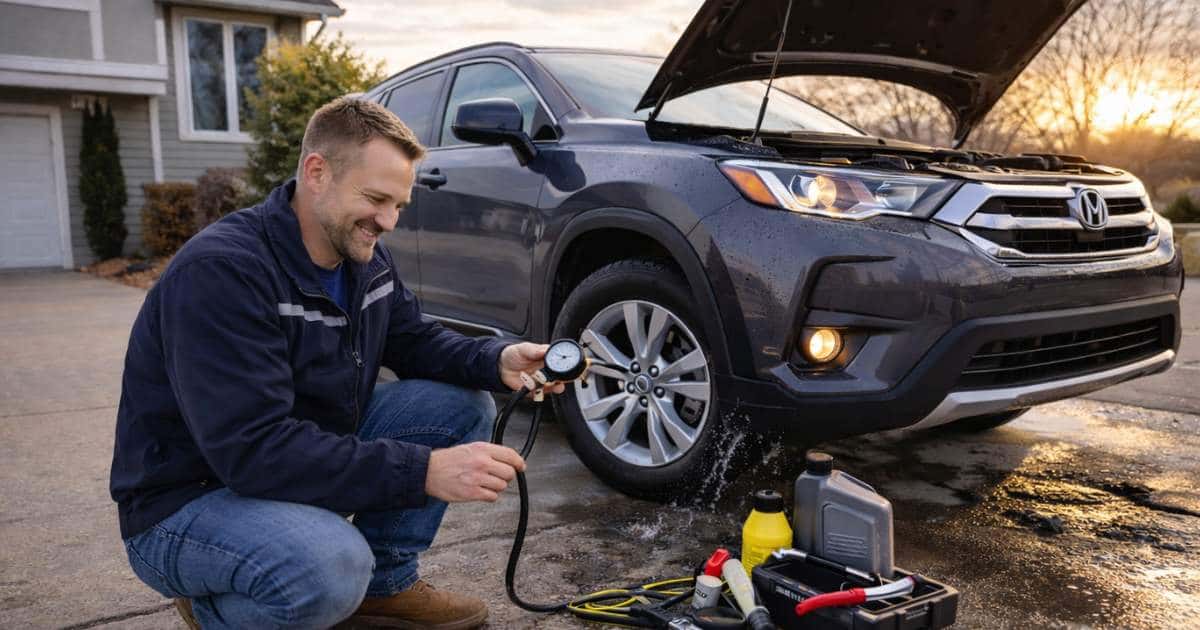
Use a reliable tire gauge and inflate all four tires to the manufacturer’s recommended PSI (usually listed on the driver-side door jamb).
Proper inflation helps your tires absorb pothole impacts, improves traction in spring rain, and reduces uneven wear.
Don’t rely on visual inspection, many underinflated tires still “look fine.”
Watch for alignment issues after pothole impacts
Potholes can knock your vehicle out of alignment quickly. If you notice your car pulling to one side on a flat stretch of road, the steering wheel isn’t
centered, or your tires are wearing unevenly, schedule a professional alignment. Driving out of alignment doesn’t just wear tires faster, it can reduce
stability when you’re avoiding rough patches on Dodge Street or merging on I-480 ramps.
Inspect sidewalls for bulges or bubbles
Look closely at the sidewalls of each tire. Any bulge or bubble is a sign of internal tire damage, often caused by a pothole impact, and it means the tire
needs immediate replacement. This is a safety issue and not something to “wait and see.”
Consider a tire rotation for even wear
Winter driving can create uneven wear patterns, especially if your alignment was slightly off or you encountered frequent potholes. Rotating your tires helps
them wear more evenly and can extend their lifespan. If you can’t remember your last rotation, spring is a smart time to reset.
- Proper PSI helps tires resist pothole damage and improves fuel economy.
- Alignment issues show up as pulling, uneven tread wear, and steering that feels “off.”
- Sidewall bubbles = replace the tire as soon as possible.
Inspecting Your Suspension and Brakes
Omaha’s post-winter roads can be punishing on suspension components. Shocks, struts, ball joints, tie rods, and control arms absorb impacts and keep your
vehicle stable. But repeated pothole hits, or one hard strike, can accelerate wear. If your car sounds different or feels less controlled after winter,
it’s worth taking seriously.
Listen for clunking, rattling, or knocking
New noises over bumps are often your first clue. Clunking, rattling, or knocking when driving over rough pavement can indicate worn or damaged suspension
components. If it’s happening regularly on your commute, don’t ignore it, small issues can become expensive repairs fast.
Pay attention to ride feel and vehicle stance
If your ride feels excessively bouncy, your car dips dramatically when braking, or one corner sits lower than the others, you may have suspension wear or
damage. Beyond comfort, suspension health affects braking distance and handling, two things that matter when you’re navigating potholes and spring rain.
Do a brake check after washing
Salt and moisture can corrode brake components. After washing your car, do a careful brake check in a safe area. Listen for grinding or squealing and pay
attention to how the pedal feels. Pulsation, vibration, or pulling during braking can point to issues that need a professional inspection.
A spring suspension check is a smart investment for Omaha drivers. It can identify problems early, before they become safety concerns or lead to costly
secondary damage like uneven tire wear.
Under the Hood: Post-Winter Recovery
Omaha cold snaps are hard on batteries and fluids. Even if your car survived winter without a major issue, spring is when winter-weakened components can
finally fail. A few quick checks now can prevent a surprise no-start or an overheating problem later.
Test your battery if cold starts were sluggish
If your car struggled to start on cold mornings, have the battery tested. Winter can weaken a battery enough that it works “just barely” during cold weather,
then fails completely later. Spring is a common time for batteries to give out after a tough winter.
Check and top off key fluids
Check your oil, coolant, and windshield washer fluid. Cold weather increases engine load, and you likely used a lot of washer fluid clearing salt and slush.
Top off fluids as needed and consider an oil change if you’re near your interval or your winter driving was mostly short trips.
Inspect belts and hoses for cracks or brittleness
Extreme cold can make rubber and plastic components more fragile. Look for cracks, glazing, or fraying on belts and check hoses for brittle spots or
seepage. Catching these early helps avoid breakdowns and overheating when spring driving ramps up.
When Winter Damage is Too Much to Handle
Sometimes the combined cost of new tires, suspension work, alignment, and rust repair can feel overwhelming. If your mechanic’s estimate is getting close to
(or exceeding) what the car is worth, it may be time to consider upgrading to a more reliable vehicle, especially if you depend on your car for commuting,
school drop-offs, or staying employed.
At CarHop of Omaha, we understand that bad credit or no credit shouldn’t prevent you from driving a safe, dependable vehicle. We specialize
in helping people get fast financing approvals regardless of credit history, so you’re not stuck with an unsafe car just because a bank only sees a score.
Our inventory of used cars, trucks, and SUVs includes many models that are well-suited for Omaha’s unpredictable weather and rough spring roads. And every
vehicle we sell comes with a limited warranty for extra peace of mind.
If you’re facing expensive repairs on an older car, exploring your options at a buy here pay here dealership can be a smart financial move.
It can get you into a dependable vehicle without the stress of traditional financing, especially when your current car is becoming a constant expense.
FAQs
How often should I get a wheel alignment in Omaha?
For Omaha drivers, it’s a good practice to get your alignment checked at least once a year, ideally in the spring after the worst of pothole season.
You should also have it checked anytime you hit a significant pothole or notice your steering pulling to one side.
What are the first signs of suspension damage from a pothole?
The most common signs include a new clunking or rattling sound when going over bumps, a noticeably bouncier or rougher ride, the vehicle pulling to one
side, or uneven tire wear. If you notice any of these, it’s best to have your suspension inspected.
Is an undercarriage car wash really necessary after winter?
Absolutely. Road salt and de-icing chemicals are extremely corrosive. An undercarriage wash is the most effective way to remove these chemicals and
prevent rust from forming on your car’s frame, brake lines, fuel tank, and exhaust system, saving you from expensive repairs down the road.
My credit isn’t great. Can I still get a reliable used car if my current one has too much winter damage?
Yes. Dealerships like CarHop of Omaha specialize in buy here pay here financing. We work with individuals who have bad credit or no credit to help them
get into a reliable vehicle with a payment plan they can afford. Don’t let past credit issues stop you from driving a safer car.
What type of vehicle is best for Omaha’s road conditions?
SUVs and cars with All-Wheel Drive (AWD) are popular choices for added traction in snow and rain. However, a well-maintained Front-Wheel Drive (FWD)
vehicle with good all-season (or winter) tires is also very capable for most Omaha drivers, especially when your tires and suspension are in good shape.
Key Takeaways
- After winter, an undercarriage wash is the most crucial step to prevent long-term rust damage from road salt.
- If your car pulls to one side or you hear clunking over bumps, get your alignment and suspension checked immediately to prevent further damage.
- If post-winter repair bills are piling up, consider upgrading to a more reliable vehicle from a dealership that understands bad credit financing.
0 comment(s) so far on Omaha’s Spring Thaw: Essential Car Maintenance Tips Before the Potholes Hit